How to Become a Web Designer: My Advice After 11+ Years as a Freelancer
I’ve worked as a freelance web designer for more than 11 years. In that time I’ve built 200+ websites for health and wellness professionals, coaches, consultants, and small businesses. Being a good web designer takes more than good taste. You also have to find clients, protect yourself, and run a real business.
If you’re looking for a web designer for your business, see my web design services or book a free call. If you want to become a web designer yourself, here is what I’ve learned.
What Does a Web Designer Actually Do?
A web designer plans how a website looks and works. That covers layout, colors, typography, navigation, mobile responsiveness, and the path that turns a visitor into a customer.
A web designer focuses on the look and experience of a site. A web developer writes the code that makes it function. On platforms like Squarespace, WordPress, and Wix the line is blurry, and most clients want one person who can handle design, basic development, and SEO.
Skills Every Web Designer Needs
You don’t need to master everything on day one. Start with these:
- Design fundamentals: layout, spacing, color, typography, and visual hierarchy.
- One website platform: Squarespace, WordPress, or Wix.
- Basic HTML and CSS: you can build without code, but a little CSS lets you fix problems and customize details.
- On-page SEO: page titles, meta descriptions, headings, image alt text, and site structure. A beautiful website nobody can find doesn’t help your client.
- Communication: clear questions, realistic deadlines, and honest updates.
- Graphic design basics: logos, social graphics, and brand consistency.
Choose a Platform and a Niche
Don’t try to learn every platform at once. Squarespace is great for polished, design-focused sites. WordPress is flexible and powerful. Wix is fast to build and easy for clients to manage. I work in all three now, but it’s smarter to get really good at one first.
Then pick a niche. “A web designer for everyone” is hard to remember and hard to rank for. “A web designer for health and wellness professionals” is specific, easier to refer, and easier to find on Google. A clear niche is one of the fastest ways to stand out.
Build a Portfolio Before You Have Clients
Nobody hires a web designer with no proof of work. You can start without clients:
- Design a website for a fictional business.
- Rebuild a website concept for your own made-up brand.
- Help a friend, a family member, or a small local business at a reduced rate.
Don’t just show screenshots. Explain the problem, your solution, and the result. Short case studies build more trust than a gallery of images.
Set Up Your Web Design Business the Right Way
I’m not a lawyer or an accountant, so check the registration and tax rules where you live. These basics apply almost everywhere:
- Always use a contract, even for small projects and friends. It should cover scope, number of revisions, timeline, payment schedule, cancellations, and who owns the files.
- Take a deposit before you start. Many designers ask for 25% to 50% upfront.
- Don’t hand over final files until you’re fully paid.
- Put a privacy policy and terms of service on your own website.
Contracts protect you and your client. They make everyone’s expectations clear from day one.
Create a Website That Attracts Clients
Your own website is your best marketing tool, and it should do more than show a portfolio. It needs:
- A headline that says who you help and how.
- Clear service pages, such as Squarespace web design, WordPress web design, and Wix web design.
- Testimonials and social proof.
- An FAQ section and a simple way to contact you.
Add a blog too. Answering the questions your ideal clients search for, like Squarespace SEO or mobile optimization, builds trust and brings in visitors who may be ready to hire.
How to Get Clients as a Web Designer
There’s no single best way. It depends on your niche, your time, and your budget. Here are the channels I’d focus on:
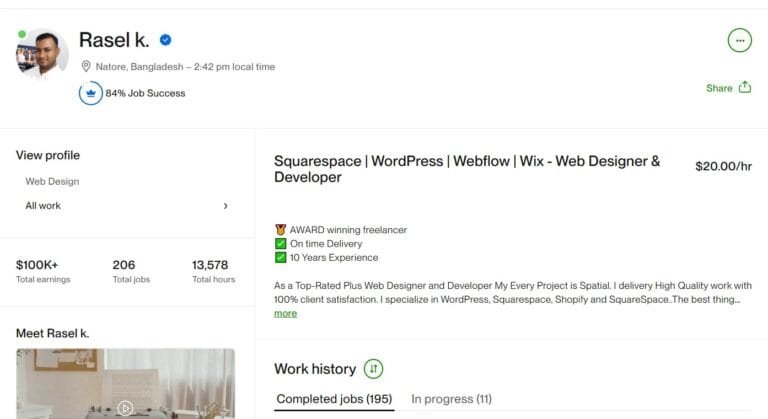
- Upwork: Great for building your first reviews and learning how to talk to clients. Write specific proposals instead of copy-pasting. You can see my Upwork profile as an example.
- Referrals: Tell friends, past colleagues, and past clients what you do. Happy clients are your best marketing.
- Portfolio platforms and social media: Behance, Dribbble, LinkedIn, and YouTube help people discover your work. Pick one or two and be consistent.
- Content marketing and SEO: It’s slower, but it compounds. A good blog post can bring in clients for years.
- Communities and forums: Helping people in places like the Squarespace Forum builds your reputation.
- Direct outreach: Reach out to businesses with outdated websites. Be polite and specific about how you could help.
Tools You’ll Need
The startup cost is low. At minimum:
- A reliable laptop and a backup (external drive or cloud)
- A design tool like Figma or Canva
- Your website platform of choice
- Google Analytics and Google Search Console
- A project management tool like Trello or Notion
- A password manager and a scheduling tool for client calls
Mistakes to Avoid as a Web Designer
Most mistakes aren’t fatal, but they can be expensive. Here are the ones I see most often:
- Underpricing your work. Low prices attract difficult clients and burn you out.
- Skipping the contract or the deposit. This is the fastest way to end up unpaid.
- Ignoring mobile and SEO. Most visitors browse on their phones, and search visibility is part of the job.
- Neglecting the client experience. Think through every step, from the first call to the handoff, including training clients to manage their own site.
- Designing only for today. A client’s business will grow, so their website should be able to grow with it.
- Going it alone. Find a mentor, a community, or a designer friend to share feedback with.
Web Designer FAQs
How long does it take to become a web designer?
You can learn the basics in a few months. Becoming confident enough to work with paying clients usually takes longer and depends on how much you practice and build real projects.
Do I need to know how to code?
Not to start, especially on Squarespace and Wix. Basic HTML and CSS will make you a stronger designer, though.
How much does a web designer charge?
It varies with the platform, the number of pages, the features, and the designer’s experience. Most designers price by project or package, and you should always scope the work before quoting.
Which platform should a beginner web designer learn?
Choose the platform your ideal clients use. Squarespace and Wix are beginner-friendly, and WordPress offers the most flexibility.
Final Thoughts
Becoming a web designer is part creative work and part business. Learn one platform well, pick a niche, build proof, protect yourself with contracts, and market yourself consistently.
Need a professional web designer for your business? I build custom Squarespace, WordPress, and Wix websites that look great and get found on Google. Book a strategy call and let’s talk about your project.